
Introduction
Water Wash Spray Booths remain one of the most reliable solutions for handling high-volume industrial painting operations. These systems use flowing water to capture paint overspray, airborne particles, and volatile contaminants before they enter the exhaust stream. Many automotive, aerospace, woodworking, and heavy equipment manufacturers still rely on this technology because it supports cleaner airflow and consistent coating quality.
Modern finishing facilities face tighter environmental rules and stricter workplace safety standards. That pressure has increased demand for effective overspray control systems. Water Wash Spray Booths help reduce airborne paint buildup while improving visibility inside the booth. They also support longer fan and duct life because fewer dry particles circulate through the exhaust system.
We often recommend these booths for facilities running continuous paint cycles or using heavy coating materials. Their design works especially well with solvent-based coatings and large-scale production environments. While dry filter booths remain popular for smaller operations, water-based capture systems offer better performance in demanding industrial settings. Understanding how these booths operate helps businesses choose the right finishing equipment for long-term production efficiency.
What Are Water Wash Spray Booths?
How the System Works
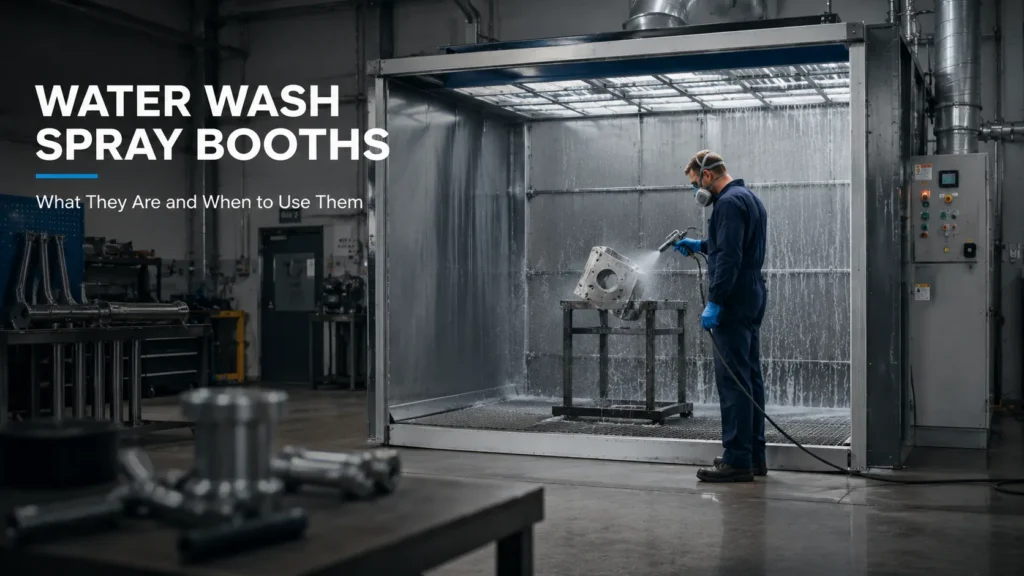
Water Wash Spray Booths use a continuous curtain or stream of water behind the spray area. Overspray particles move toward the exhaust chamber during painting. The flowing water traps paint particles before air exits the booth. This process limits airborne contamination and reduces combustible paint residue inside the system.
Most systems include pumps, water reservoirs, separator chambers, and sludge collection areas. Paint solids mix with water and settle into collection tanks for removal. Operators usually add treatment chemicals to improve paint separation and maintain water quality. Proper circulation keeps the booth operating efficiently during long production shifts.
These booths support high paint transfer environments where dry filters clog quickly. Industries using enamel, lacquer, polyurethane, or epoxy coatings often prefer this setup. The system handles larger overspray volumes without frequent airflow restrictions. That stability improves coating consistency and worker visibility during production.
Main Components of the Booth
The booth structure includes several key operating sections:
Water curtain or waterfall chamber.
Exhaust plenum and duct system.
Circulation pump and piping.
Sludge collection tank.
Air makeup and ventilation units.
Paint arrestor separator system.
Each component supports airflow balance and overspray capture performance. Regular maintenance keeps these parts operating correctly. Explore our latest insights in Spray Booth.
| Component | Function |
|---|---|
| Water Curtain | Captures paint overspray particles |
| Pump System | Circulates water continuously |
| Exhaust Fan | Removes contaminated air |
| Sludge Tank | Collects paint residue |
| Separator Chamber | Separates solids from airflow |
| Ventilation System | Maintains clean booth airflow |
Benefits of Water Wash Spray Booths
Better Overspray Control
Water Wash Spray Booths provide strong overspray capture efficiency in heavy production environments. Many industrial facilities choose them because they maintain stable airflow for longer periods. Dry filters lose efficiency as they clog, but water systems continue operating consistently during continuous spraying.
Cleaner airflow also improves coating appearance. Operators gain better visibility while spraying large parts or complex surfaces. Reduced airborne particles lower the risk of paint defects such as dirt inclusions or uneven finishes. That advantage matters in industries requiring high cosmetic standards.
These booths also reduce paint buildup inside exhaust ducts. Lower residue accumulation helps reduce fire risks and supports safer facility operation. Many safety inspectors favor systems that limit combustible overspray accumulation in industrial painting environments.
Long-Term Operational Advantages
Facilities with high daily paint usage often benefit from lower filter replacement costs. Dry filter booths require frequent filter changes during intensive production schedules. Water systems eliminate much of that recurring expense. Although water treatment adds maintenance requirements, many large operations still achieve lower long-term operating costs.
Key operational advantages include:
Stable airflow during long shifts.
Lower filter replacement frequency.
Improved worker visibility.
Reduced combustible overspray buildup.
Better handling of heavy coating materials.
These benefits explain why many large manufacturing plants continue using water-based paint arrestor systems today.
When to Use Water Wash Spray Booths
High-Production Manufacturing
Water Wash Spray Booths work best in facilities running continuous finishing operations. Automotive factories, truck manufacturers, and industrial equipment plants often spray large parts throughout the day. These environments generate substantial overspray volumes that quickly overwhelm dry filter systems.
Facilities applying solvent-based coatings also benefit from water-based overspray capture. Wet collection systems handle sticky or heavy coatings more effectively than standard filtration systems. That performance improves booth cleanliness and reduces maintenance downtime.
Wood finishing plants frequently use these booths when spraying stains, sealers, and lacquers. Furniture production creates fine overspray particles that accumulate rapidly in dry systems. Water-based capture keeps airflow more stable during long production runs.
Situations Where Dry Filters May Work Better
Not every operation needs a water-based booth. Smaller repair shops or low-volume coating facilities may prefer dry filter systems. These booths cost less initially and require simpler maintenance routines. Businesses with limited production schedules often find dry filtration more practical.
Water Wash Spray Booths also require wastewater management and sludge disposal procedures. Facilities must follow environmental regulations for contaminated water handling. Smaller companies sometimes avoid those extra requirements by choosing dry filter technology instead.
The right choice depends on several operational factors:
| Application Type | Recommended Booth Type |
|---|---|
| High-volume industrial painting | Water wash booth |
| Heavy solvent coatings | Water wash booth |
| Small repair work | Dry filter booth |
| Limited daily production | Dry filter booth |
| Large automotive parts | Water wash booth |
| Light coating applications | Dry filter booth |
Maintenance Tips for Water Wash Spray Booths
Daily and Weekly Maintenance
Routine maintenance keeps Water Wash Spray Booths operating safely and efficiently. Operators should inspect water flow daily because uneven circulation reduces overspray capture performance. Pump pressure and nozzle condition also require regular checks.
Sludge buildup creates another major maintenance concern. Paint solids collect in tanks and separators over time. Excess accumulation can restrict water movement and reduce booth efficiency. Weekly cleaning prevents excessive residue buildup and supports better airflow balance.
Water chemistry also affects booth performance. Many facilities use treatment chemicals to improve paint separation and reduce odors. Monitoring pH levels helps maintain proper system operation and prevents corrosion inside tanks or piping.
Long-Term System Care
Scheduled inspections help extend equipment life and reduce unexpected downtime. Exhaust fans, duct systems, and pumps require periodic servicing to maintain airflow performance. Preventive maintenance often costs less than emergency repairs during production shutdowns.
Important long-term maintenance practices include:
Remove sludge regularly.
Monitor water quality weekly.
Inspect pumps and piping monthly.
Clean exhaust chambers routinely.
Replace worn seals and nozzles.
Check airflow performance quarterly.
Consistent maintenance protects coating quality while improving overall booth reliability.
Conclusion
Water Wash Spray Booths remain a strong solution for industrial finishing environments that demand reliable overspray control and stable airflow. Their water-based capture system handles high paint volumes more effectively than many dry filtration setups. That performance supports cleaner production areas, better coating quality, and improved workplace safety.
These booths work especially well in automotive manufacturing, heavy equipment production, woodworking, and other continuous finishing operations. Facilities using solvent-based coatings often gain the greatest operational advantage from water-based overspray control systems. However, smaller operations may still prefer dry filter booths because of lower maintenance complexity and reduced wastewater handling needs.
Choosing the right spray booth depends on production volume, coating type, maintenance capability, and environmental requirements. Businesses that understand these factors can select equipment that improves long-term efficiency while supporting safer and cleaner painting operations.