
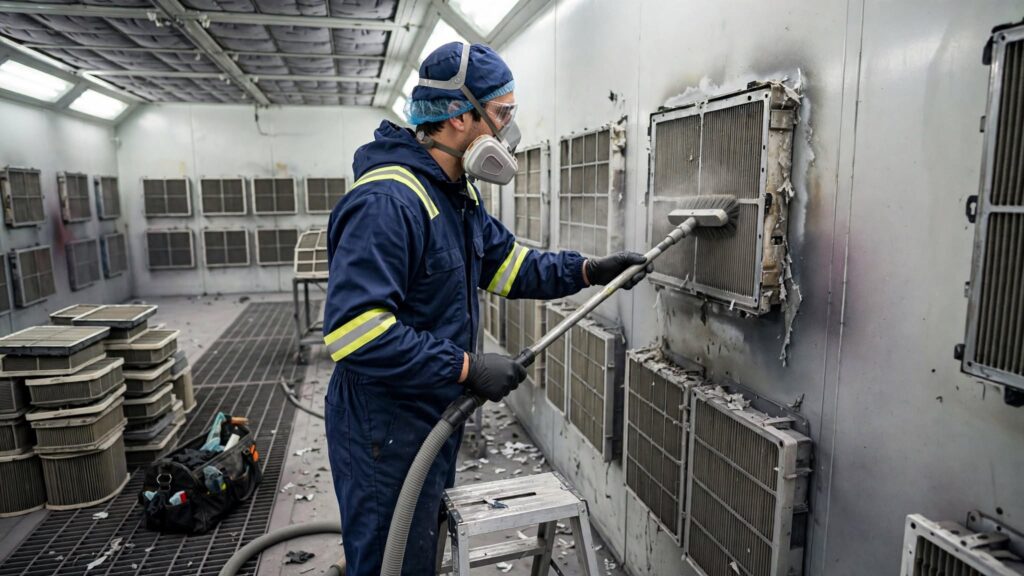
A paint spray booth creates a controlled environment for applying coatings while helping manage overspray, airborne particles, and paint fumes. However, the booth can only perform properly when its filters, ventilation system, lighting, surfaces, and other components are kept in suitable condition. Dust buildup, clogged filters, damaged seals, or neglected ventilation can affect both workplace safety and the quality of the finished coating.
Regular paint spray booth maintenance is therefore more than a cleaning task. It involves inspecting the booth, identifying developing problems, replacing worn components, and keeping airflow unobstructed. A consistent maintenance routine can also make it easier to spot faults before they disrupt painting work.
Spray painting produces overspray and contaminants that can settle on walls, floors, filters, fans, and other surfaces. If these materials are allowed to accumulate, the working environment may become harder to control.
Maintenance also directly affects paint application. For example, restricted airflow may interfere with the movement of airborne particles through the booth. Dust or dried coating material can find its way onto a freshly painted surface, creating imperfections that require additional preparation or refinishing.
For this reason, booth maintenance should address safety, cleanliness, airflow, and equipment condition together rather than treating them as separate concerns.
Routine cleaning is one of the simplest parts of spray booth care, but it needs to be performed carefully.
Paint residue and dust can collect on booth walls, floors, grilles, and other exposed areas. Removing these contaminants helps maintain a cleaner painting environment and makes inspections easier because leaks, damage, and unusual buildup are more visible.
The floor receives a significant amount of dust and overspray during normal operation. It should be cleaned according to the booth’s operating procedures rather than waiting until contamination becomes obvious.
Avoid introducing unnecessary dirt into the booth as well. Tools, hoses, clothing, and equipment brought in from other workshop areas can carry particles that later become airborne during spraying.
Filters are a critical part of the booth’s airflow and contamination-control system. Depending on the booth design, different filters may be used for incoming air, exhaust air, or both.
As filters collect contaminants, resistance to airflow can increase. Waiting until a filter looks heavily contaminated is not always a reliable maintenance method because filter condition is not determined by appearance alone.
Follow the booth and filter manufacturers’ inspection and replacement guidance. Where the system includes pressure monitoring or other filter-condition indicators, these should also form part of routine checks.
When replacing filters:
Use filters suitable for the specific booth and application.
Install them in the correct position and orientation.
Check that they fit securely without unintended gaps.
Inspect the surrounding filter frames for damage or contamination.
Keeping maintenance records can also help operators track filter changes and identify unusual changes in service intervals.
A spray booth depends on controlled airflow to move fumes, overspray, and airborne contaminants through its designed ventilation path. Problems with fans, ducts, filters, dampers, or air inlets can alter that airflow.
Operators should watch for warning signs such as unusual fan noise, noticeable changes in airflow, unexpected overspray movement, or persistent haze inside the booth.
Fans and associated ventilation components should be inspected as recommended by the equipment manufacturer. Look for contamination, physical damage, unusual vibration, loose components, and other signs that servicing may be required.
Exhaust ducts also need appropriate inspection and cleaning. Coating residue inside ventilation components should not simply be ignored because it is out of sight.
Small defects can influence how effectively a booth maintains its controlled environment.
Check doors to make sure they close correctly and inspect seals for deterioration or damage. Panels, viewing windows, and other booth surfaces should also be examined for defects that could interfere with operation or allow contamination to enter.
Lighting deserves attention too. Clean lighting surfaces provide better visibility when preparing, spraying, and inspecting painted components. Damaged lighting equipment should be handled according to the booth manufacturer’s procedures and applicable workplace requirements rather than through improvised repairs.
Good housekeeping should extend beyond the booth itself. Paint containers, used masking materials, cleaning supplies, and waste can quickly create clutter around a busy spraying area.
Only materials needed for the current work should be kept where appropriate. Waste and used consumables should be handled according to the relevant workplace procedures and the characteristics of the materials involved.
Cleaning products also require consideration. A product suitable for an ordinary workshop surface may not necessarily be appropriate for every spray booth component. Check equipment and chemical guidance before introducing new cleaning substances into the booth.
Maintenance becomes easier to manage when tasks are divided according to how frequently they need attention. Some checks may form part of everyday operation, while others may be scheduled periodically or performed according to equipment condition.
A practical plan might cover routine housekeeping, filter inspections, ventilation checks, lighting, seals, control equipment, ductwork, and more detailed servicing.
The correct frequency depends on factors such as booth design, workload, coating materials, operating conditions, and manufacturer recommendations. A booth used intensively may require attention more frequently than one used occasionally.
Maintenance records are useful here. Recording inspections, filter replacements, repairs, and observed problems creates a clearer picture of the booth’s condition over time.
Routine cleaning and visual inspections can often be handled as part of normal workshop procedures, but not every maintenance task should be treated as a do-it-yourself job.
Electrical faults, ventilation problems, damaged safety-related components, control-system issues, or significant mechanical defects may require qualified personnel. Continuing to operate equipment with an unresolved fault can turn a manageable maintenance issue into a larger problem.
Staff should therefore know both what they are expected to inspect and when a problem needs to be escalated.
Effective paint spray booth maintenance depends on consistency rather than occasional deep cleaning. Filters need monitoring, airflow must remain unobstructed, interior surfaces should stay clean, and components such as doors, seals, lighting, fans, and ducts require appropriate inspection.
A structured maintenance schedule supported by clear records makes these responsibilities easier to manage. By combining routine housekeeping with equipment-specific inspections and timely professional servicing, workshops can maintain a cleaner, more controlled spray environment while identifying potential problems before they interfere with normal painting operations.
We design and manufacture high-performance custom spray booths built to meet your exact production needs. Our solutions combine advanced airflow engineering, durable construction, and industry-compliant safety standards to deliver consistent, high-quality finishes.