
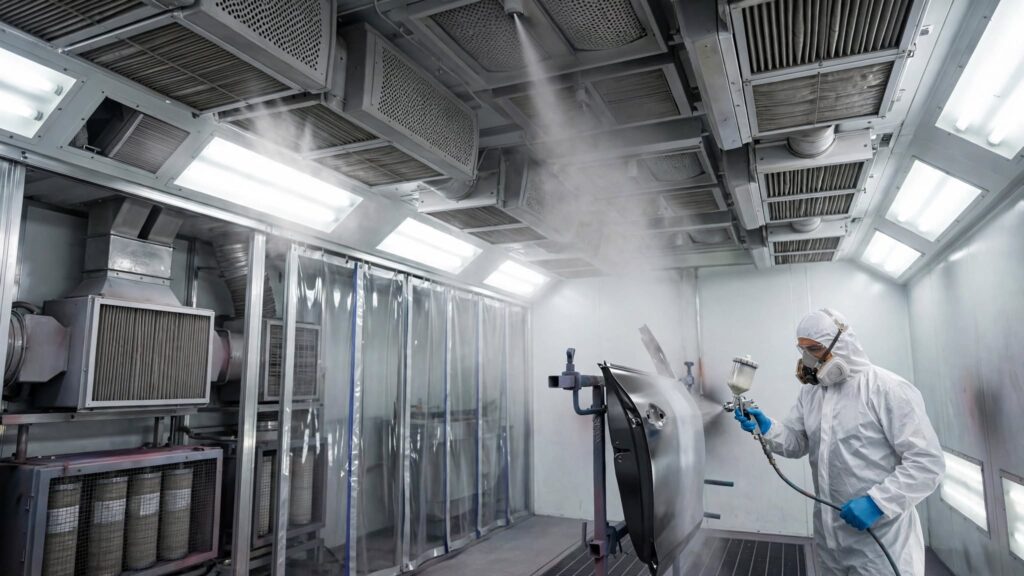
Spray booth ventilation does much more than move air through a workspace. It helps control paint mist, airborne contaminants, fumes, heat, and overspray while creating more consistent conditions around the surface being coated. When airflow is poorly managed, both workplace safety and finish quality can suffer.
A properly functioning ventilation system continuously removes contaminated air from the spray area and replaces it with cleaner air. The way that air enters, travels through, and leaves the booth affects visibility, contamination control, coating application, and the overall working environment.
Understanding how spray booth ventilation works makes it easier to recognize problems before they begin affecting daily operations.
During spraying, small coating particles and vapors become airborne. Without controlled airflow, these contaminants can remain suspended inside the booth or move unpredictably around the work area.
Spray booth ventilation is designed to direct contaminated air toward the booth’s exhaust system. Filters capture appropriate airborne material, while exhaust airflow carries remaining contaminants away according to the booth’s design.
The goal is not simply to create strong airflow. Air needs to move in a controlled pattern. Too little airflow can allow overspray to accumulate, while poorly balanced or excessive airflow may interfere with the spray pattern and coating process.
Different booth configurations manage this movement differently. Downdraft, crossdraft, and sidedraft booths, for example, use distinct airflow paths. Regardless of design, predictable air movement is essential.
Spraying creates fine droplets that do not all land on the intended surface. Some become overspray and remain in the surrounding air.
Effective spray booth ventilation helps move this airborne material away from the operator and toward the filtration and exhaust areas. This also improves visibility inside the booth, which is important when the painter needs to judge coverage and application consistency.
Ventilation should always work alongside suitable personal protective equipment and established operating procedures rather than being treated as a replacement for them.
Depending on the coating being applied, spraying can release vapors into the booth atmosphere. A properly operating exhaust system helps prevent these contaminants from simply collecting inside the enclosed work area.
Ventilation performance can decline when filters become overloaded, exhaust components develop problems, or airflow passages are obstructed. Routine inspection is therefore closely connected to safe booth operation.
This is also where Paint Spray Booth Maintenance: How to Keep Your Booth Safe becomes relevant. Ventilation depends on clean filters, functioning fans, unobstructed ducts, and other components that require regular attention.
Spray operations can introduce heat, suspended particles, and reduced visibility. Controlled air exchange helps maintain a more manageable booth environment by continuously moving contaminated air through the intended path.
Operators should still follow the requirements that apply to their specific booth, coating materials, equipment, and workplace. Ventilation is one part of a larger safety system.
Ventilation has a direct relationship with the conditions in which paint is applied. Even good spray technique can produce disappointing results when the surrounding air is carrying dust, overspray, or other contamination.
Controlled airflow carries excess spray away from the object rather than allowing it to circulate around the booth. This reduces the chance that airborne coating particles will settle back onto freshly painted areas.
When overspray hangs in the air, it can contribute to a rough or dusty-looking surface. Consistent airflow gives painters a cleaner environment in which to apply each coat.
Finish defects are not always caused by the paint itself. Dust, lint, loose filter material, and other particles can land on a wet coating and become visible after curing.
A well-maintained spray booth filtration system helps control incoming and circulating contaminants. However, filters must be appropriate for the system and replaced according to their condition and applicable maintenance guidance. Dirty or damaged filters can disrupt airflow as well as contamination control.
Predictable airflow helps the painter understand how sprayed material will behave after leaving the spray gun. If airflow becomes uneven because of clogged filters, blocked exhaust areas, or mechanical issues, the spray environment may change across different parts of the booth.
That can make consistent application more difficult. Painters may notice unusual overspray movement, changes in visibility, or differences in how material settles on the surface.
Changes in booth behavior often provide early clues that the ventilation system should be inspected. Operators may notice paint mist lingering longer than usual, heavier overspray deposits, reduced visibility, unusual airflow patterns, or filters becoming visibly loaded.
Other warning signs can include unexpected dust in finished coatings or noticeable changes in exhaust performance.
These symptoms should not automatically be blamed on ventilation alone. Spray-gun settings, coating preparation, cleaning practices, temperature, and operator technique can also affect results. Looking at the complete process helps avoid replacing parts or adjusting equipment unnecessarily.
Ventilation performance depends on several components working together. Routine checks should focus on the parts that directly influence air movement and filtration.
Useful practices include:
Inspecting intake and exhaust filters regularly.
Replacing filters according to their condition and applicable manufacturer guidance.
Keeping air passages, grilles, and exhaust areas clear.
Checking fans and related equipment for unusual noise or changes in operation.
Watching for changes in overspray movement inside the booth.
Keeping doors and booth openings in their intended operating position during spraying.
Investigating sudden changes in finish quality instead of compensating only with spray-gun adjustments.
Maintenance procedures should always follow the requirements for the specific booth and equipment being used.
More airflow is not automatically better. A spray booth is designed around a particular airflow pattern, and disrupting that balance can create new problems.
Excessive or poorly directed air movement may disturb the spray pattern or introduce turbulence. Insufficient airflow may allow contaminants and overspray to remain in the booth. The practical goal is stable, controlled ventilation that operates as the booth was designed to operate.
This is why ventilation problems should be diagnosed rather than addressed through random adjustments.
Spray booth ventilation connects two important parts of painting operations: maintaining a controlled working environment and producing a clean, consistent finish. Proper airflow removes airborne overspray and contaminants while helping prevent unwanted material from settling onto freshly coated surfaces.
Good results depend on the entire ventilation system working together, including intake air, filters, exhaust components, and the booth’s designed airflow path. Regular inspection and timely maintenance make it easier to identify changes before they begin affecting both working conditions and paint quality.
We design and manufacture high-performance custom spray booths built to meet your exact production needs. Our solutions combine advanced airflow engineering, durable construction, and industry-compliant safety standards to deliver consistent, high-quality finishes.