
Introduction
Industrial Spray Booths play a critical role in modern UK manufacturing, automotive, aerospace, and finishing industries. Businesses rely on these systems to improve paint quality, control overspray, and maintain workplace safety. A properly designed booth also supports environmental compliance under strict UK health and safety regulations.
Many UK workshops now upgrade older finishing systems because energy costs continue rising. Industrial spray booths help reduce paint waste, improve airflow efficiency, and shorten production cycles. These benefits directly improve operational performance across large and small businesses.
UK companies also face stricter rules regarding volatile organic compounds, known as VOC emissions. Modern spray booths include advanced filtration systems that reduce airborne contaminants and create cleaner working environments. This improvement supports employee safety while helping businesses meet compliance requirements.
Industrial sectors including automotive repair, metal fabrication, woodworking, and commercial manufacturing all use spray booth systems daily. Each industry requires different booth sizes, airflow designs, and extraction systems. Understanding these differences helps businesses choose equipment that matches production demands without overspending on unnecessary features.
What Are Industrial Spray Booths?
Understanding the Core Purpose
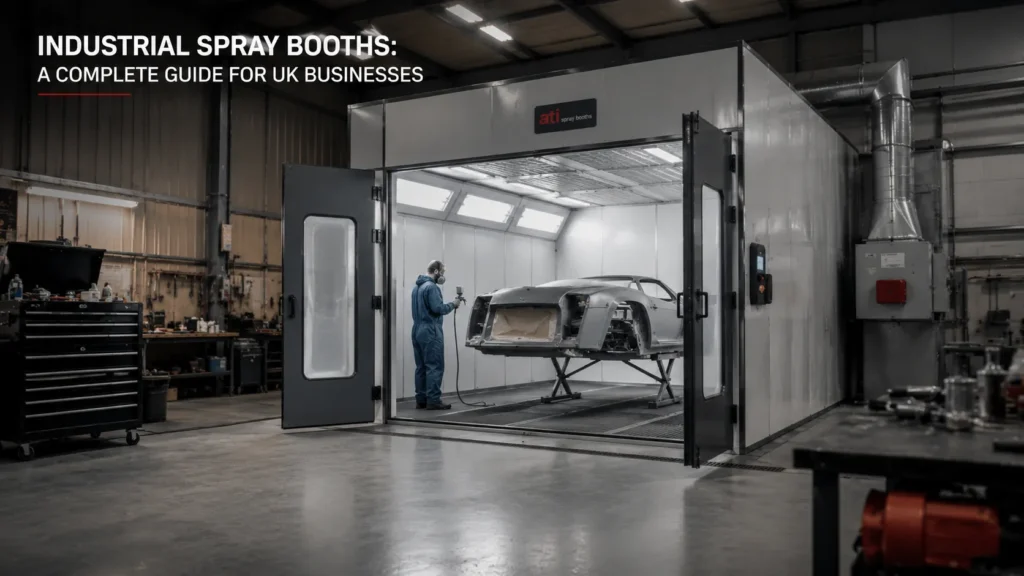
Industrial Spray Booths are enclosed systems designed for controlled paint and coating applications. These systems manage airflow, temperature, overspray, and contamination during finishing processes. A controlled environment improves coating consistency and reduces surface defects.
Most industrial spray booths use filtered airflow to remove harmful particles from the workspace. This process protects both workers and painted products. UK safety regulations strongly encourage controlled extraction systems in commercial finishing operations.
Modern booths also improve drying times through heated airflow systems. Faster curing helps businesses increase daily production output. Many UK manufacturers now prioritize energy-efficient booth designs because heating costs continue increasing.
Main Components of a Spray Booth
Several key components determine overall spray booth performance:
Air intake filters.
Extraction fans.
Exhaust filtration systems.
Heating and curing units.
Lighting systems.
Control panels.
Safety monitoring systems.
Each component affects operational efficiency and paint quality. Poor airflow balance often creates uneven coatings and increased overspray. High-quality filtration systems reduce contamination and improve final surface appearance. Read More: How to Choose the Right Spray Booth for Your UK Workshop
Types of Industrial Spray Booths
Crossdraft Spray Booths
Crossdraft booths move air horizontally from one end to another. These systems remain popular because installation costs stay relatively low. Smaller UK workshops often choose crossdraft systems for light industrial applications.
However, airflow passes directly across the painted object. This movement may increase contamination risks in precision finishing projects. Crossdraft booths still work effectively for general commercial painting tasks.
Downdraft Spray Booths
Downdraft Industrial Spray Booths pull air vertically from ceiling to floor. This design creates cleaner airflow and superior paint finishes. Automotive manufacturers frequently choose downdraft systems for premium coating applications.
Downdraft booths require more complex installation and higher operating costs. Despite this expense, they improve paint consistency and reduce overspray accumulation. Many UK body shops consider downdraft systems essential for high-end finishing work.
Side Downdraft Booths
Side downdraft systems combine benefits from both crossdraft and downdraft airflow designs. Air enters through the ceiling and exits through side wall extraction points. These booths require less excavation compared to full downdraft systems.
Many UK businesses prefer side downdraft booths because installation remains simpler while maintaining strong airflow performance. This balance makes them practical for medium-sized industrial facilities.
Key Benefits for UK Businesses
Improved Workplace Safety
Industrial Spray Booths significantly reduce worker exposure to hazardous fumes and airborne particles. UK health regulations place strong emphasis on ventilation and contaminant control. Proper booth systems help businesses meet these safety requirements.
Advanced filtration systems capture paint particles before they spread throughout the workshop. Cleaner air reduces respiratory risks and improves overall working conditions. Safe environments also support employee productivity and retention.
Better Paint Quality
Controlled airflow minimizes dust contamination during painting processes. Stable temperatures and consistent ventilation improve coating adhesion and surface finish quality. Businesses producing premium products benefit greatly from these improvements.
Consistent finishes also reduce costly rework and material waste. This efficiency helps businesses control operational expenses over time. Many manufacturers recover booth investments through reduced defects alone.
Environmental Compliance
UK environmental regulations continue tightening regarding industrial emissions. Industrial Spray Booths help businesses manage VOC emissions and airborne pollutants effectively. Proper filtration systems reduce environmental impact while supporting compliance inspections.
Companies failing to meet environmental standards may face penalties and operational restrictions. Investing in modern spray booth technology lowers long-term compliance risks significantly.
Choosing the Right Industrial Spray Booth
Assess Production Requirements
Businesses should first evaluate production volume before purchasing equipment. High-output facilities require stronger airflow systems and larger booth dimensions. Smaller workshops may achieve better value through compact booth configurations.
Production speed also affects heating and curing requirements. Fast-paced operations often benefit from integrated drying systems that reduce turnaround times.
Consider Available Space
Workshop size directly influences booth selection. Full downdraft systems may require floor excavation and additional ventilation infrastructure. Side downdraft booths usually fit existing facilities more easily.
UK industrial properties often face space limitations. Careful planning prevents costly installation complications later. Businesses should always measure workflow space around the booth area. For more insights, check out Spray Booth Installation.
Compare Energy Efficiency
Energy efficiency now plays a major role in operational costs. Modern Industrial Spray Booths include variable-speed fans, insulated panels, and heat recovery systems. These features lower electricity and heating expenses substantially.
The following table highlights common booth comparisons:
| Booth Type | Airflow Direction | Installation Cost | Finish Quality | Energy Efficiency |
|---|---|---|---|---|
| Crossdraft | Horizontal | Low | Moderate | Moderate |
| Downdraft | Vertical | High | Excellent | High |
| Side Downdraft | Angled Side Flow | Medium | Very Good | High |
Maintenance and Compliance Tips
Regular Filter Replacement
Dirty filters reduce airflow performance and increase contamination risks. Businesses should follow manufacturer replacement schedules carefully. Consistent maintenance improves booth efficiency and extends equipment lifespan.
Blocked filters also force extraction fans to work harder. This issue increases energy consumption and operating costs over time.
Conduct Routine Inspections
Regular inspections help identify airflow issues, electrical faults, and worn components early. UK businesses should maintain clear maintenance records for compliance purposes. Documented inspections support health and safety audits effectively.
Important maintenance checks include:
Airflow testing.
Fan motor inspections.
Filter condition monitoring.
Lighting performance checks.
Safety system verification.
Preventive maintenance reduces unexpected downtime and protects long-term equipment reliability.
Conclusion
Industrial Spray Booths remain essential for UK businesses seeking safer operations, improved paint quality, and stronger environmental compliance. Modern systems provide controlled airflow, better filtration, and increased production efficiency across multiple industries. These benefits help businesses reduce waste, improve finishing standards, and maintain safer working conditions.
Choosing the right spray booth requires careful evaluation of production needs, facility space, and long-term operating costs. Downdraft systems deliver premium finishes, while side downdraft designs balance performance and affordability. Smaller workshops may still benefit from simpler crossdraft solutions.
UK businesses also gain long-term value through energy-efficient technologies and lower compliance risks. Proper maintenance further improves operational performance and equipment lifespan. Companies investing in modern Industrial Spray Booths position themselves for stronger productivity, improved quality control, and sustainable industrial growth.