
Introduction
Dry Filter Spray Booths remain one of the most practical finishing solutions for industrial painting operations. Many workshops prefer them because they offer simple installation, lower operating costs, and reliable overspray control. These booths use layered filtration systems to capture paint particles before air exits the workspace. The design supports cleaner air quality and safer working conditions across multiple industries.
Manufacturers widely use Dry Filter Spray Booths for automotive refinishing, metal fabrication, woodworking, furniture production, and industrial coating projects. Compared with water wash systems, dry filter models require less maintenance infrastructure and lower water consumption. This advantage makes them attractive for small and medium-sized workshops seeking efficient paint containment.
Modern Dry Filter Spray Booths also help companies meet workplace safety and environmental standards. High-efficiency filter media can capture a significant percentage of airborne paint particles. Many systems now include energy-efficient airflow controls and modular booth configurations. These features improve productivity without increasing operational complexity. Understanding the benefits, uses, and maintenance needs helps businesses choose the right booth for long-term performance.
What Are Dry Filter Spray Booths?
How the Filtration System Works
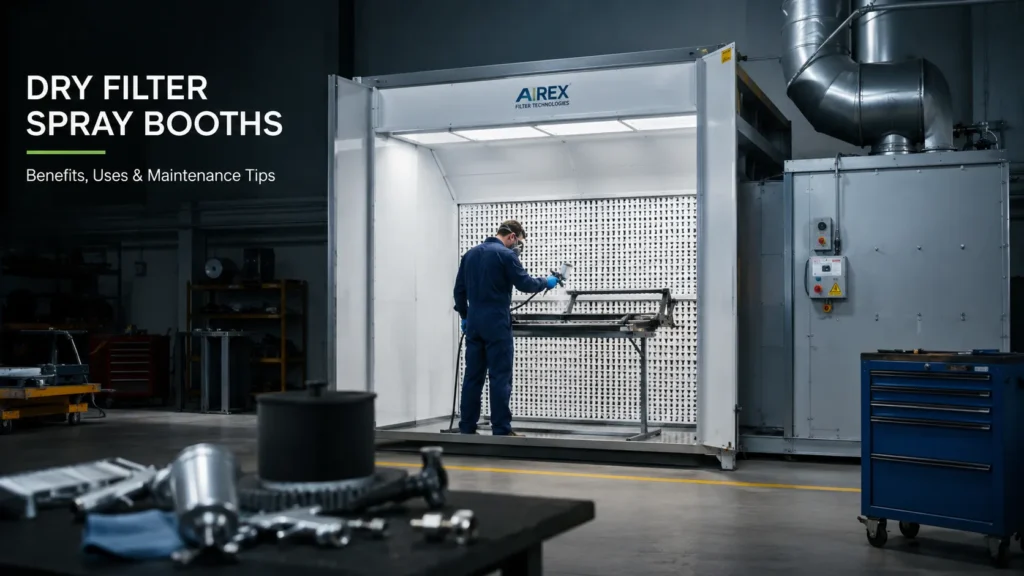
Dry Filter Spray Booths operate through controlled airflow and layered filter technology. Exhaust fans pull contaminated air through intake sections and filtration panels. These filters trap paint overspray before releasing cleaner air outside the booth. Most systems use fiberglass, cardboard, polyester, or multi-stage filter combinations for improved particle capture.
The booth creates negative pressure that prevents paint particles from escaping into surrounding workspaces. This process improves visibility during spraying and reduces contamination on finished surfaces. Operators also benefit from safer breathing conditions when ventilation functions correctly.
Many Dry Filter Spray Booths support both open-face and enclosed configurations. Open-face models suit smaller workshops with limited space. Fully enclosed booths provide greater contamination control for high-quality finishing work. Airflow capacity normally ranges between 0.3 and 0.5 meters per second, depending on booth size and coating requirements.
Main Components of a Dry Filter Booth
Key components work together to maintain consistent airflow and overspray capture. Each part affects booth efficiency and coating quality.
| Component | Function |
|---|---|
| Exhaust Fan | Pulls contaminated air through filters |
| Filter Media | Captures paint particles and overspray |
| Intake Section | Allows fresh air into the booth |
| Lighting System | Improves visibility during spraying |
| Control Panel | Manages airflow and booth operation |
| Ducting System | Directs filtered air outside |
Proper component selection directly affects booth performance and operating costs. High-quality filters often extend maintenance intervals and improve air cleanliness.
Benefits of Dry Filter Spray Booths
Lower Operating Costs
Dry Filter Spray Booths generally cost less to install and operate than water wash systems. They require no water circulation equipment, pumps, or chemical treatment systems. This design reduces energy use and simplifies daily operation.
Many workshops choose dry filter systems because replacement filters remain affordable and easy to source. Maintenance teams can replace filters quickly without specialised tools. Lower downtime improves productivity during busy production schedules.
Energy efficiency also contributes to cost savings. Modern booths often use variable-speed fans and optimised airflow designs. These features reduce unnecessary power consumption while maintaining proper ventilation performance.
Cleaner Working Environment
Air quality remains critical in any spray finishing facility. Dry Filter Spray Booths help reduce airborne overspray and workplace contamination. Effective filtration limits paint buildup on equipment, floors, and nearby surfaces.
Cleaner environments improve coating quality by reducing dust and debris during application. Workers also experience better visibility while spraying. Improved lighting and controlled airflow support more accurate paint application.
Important workplace advantages include:
Reduced airborne paint particles.
Improved operator safety.
Better coating consistency.
Lower contamination risks.
Easier housekeeping and cleanup.
Many booths can achieve filtration efficiencies above 95% when using high-performance filter media. Proper maintenance remains essential for maintaining these results.
Common Uses of Dry Filter Spray Booths
Automotive and Industrial Applications
Dry Filter Spray Booths are widely used in automotive refinishing facilities. Body shops rely on them for vehicle painting, bumper repairs, and touch-up operations. Controlled airflow helps achieve smoother finishes while reducing overspray contamination.
Industrial manufacturers also use these booths for machinery, fabricated metal parts, and structural steel coatings. Powder coating pre-finishing operations often include dry filter booths for liquid primer application. Their modular construction allows businesses to scale production as demand increases.
Furniture and woodworking companies benefit from these systems as well. Paints, lacquers, and varnishes generate overspray that requires effective capture. Dry filtration helps maintain cleaner production areas and protects product quality.
Suitable Industries
Several industries regularly install Dry Filter Spray Booths because of their flexibility and lower maintenance demands.
Common industries include:
Automotive refinishing.
Aerospace component painting.
Furniture manufacturing.
Agricultural equipment production.
Metal fabrication workshops.
Plastic product finishing.
Small workshops especially value the compact footprint and simpler installation process. Many systems can fit existing production layouts without major building modifications.
Maintenance Tips for Long-Term Performance
Regular Filter Replacement
Routine filter maintenance remains the most important requirement for Dry Filter Spray Booths. Clogged filters restrict airflow and reduce overspray capture efficiency. Poor airflow may also create uneven paint finishes and unsafe working conditions.
Most facilities inspect filters weekly and replace them based on paint volume and operating hours. Heavier coating applications require more frequent changes. Monitoring static pressure helps determine when filters approach capacity.
Signs that filters require replacement include:
Reduced airflow performance.
Visible overspray escape.
Increased paint buildup inside the booth.
Higher fan noise levels.
Uneven coating quality.
Using compatible replacement filters helps maintain manufacturer-recommended airflow specifications. Don’t miss our recent post about Industrial Spray Booths: A Complete Guide for UK Businesses.
Cleaning and Inspection Procedures
Consistent cleaning improves booth lifespan and operational reliability. Paint residue should never accumulate on walls, ducting, or lighting fixtures. Excess buildup can restrict airflow and increase fire risks.
Technicians should inspect fans, motors, belts, and electrical systems during scheduled maintenance. Damaged seals or worn components may reduce booth efficiency. Lubricating moving parts also helps prevent unexpected equipment failures.
A simple maintenance checklist supports better long-term performance:
| Maintenance Task | Recommended Frequency |
|---|---|
| Inspect Filters | Weekly |
| Replace Filters | As needed |
| Clean Interior Surfaces | Weekly |
| Inspect Exhaust Fans | Monthly |
| Check Electrical Systems | Quarterly |
| Full System Inspection | Annually |
Preventive maintenance reduces costly downtime and extends equipment service life.
Conclusion
Dry Filter Spray Booths provide an efficient and cost-effective solution for modern finishing operations. Their simple filtration design supports cleaner workspaces, safer conditions, and reliable overspray control. Many industries choose these booths because they require lower installation costs and easier maintenance than water wash alternatives.
These systems continue evolving with improved filter technologies and energy-efficient airflow controls. Businesses can select open-face or enclosed designs depending on production requirements and available space. Proper maintenance remains essential for maintaining airflow performance and coating quality over time.
Companies investing in Dry Filter Spray Booths should focus on correct booth sizing, regular filter replacement, and scheduled inspections. These practices improve operational efficiency while supporting consistent finishing results. A well-maintained booth delivers long-term value for workshops seeking dependable paint containment and cleaner production environments.