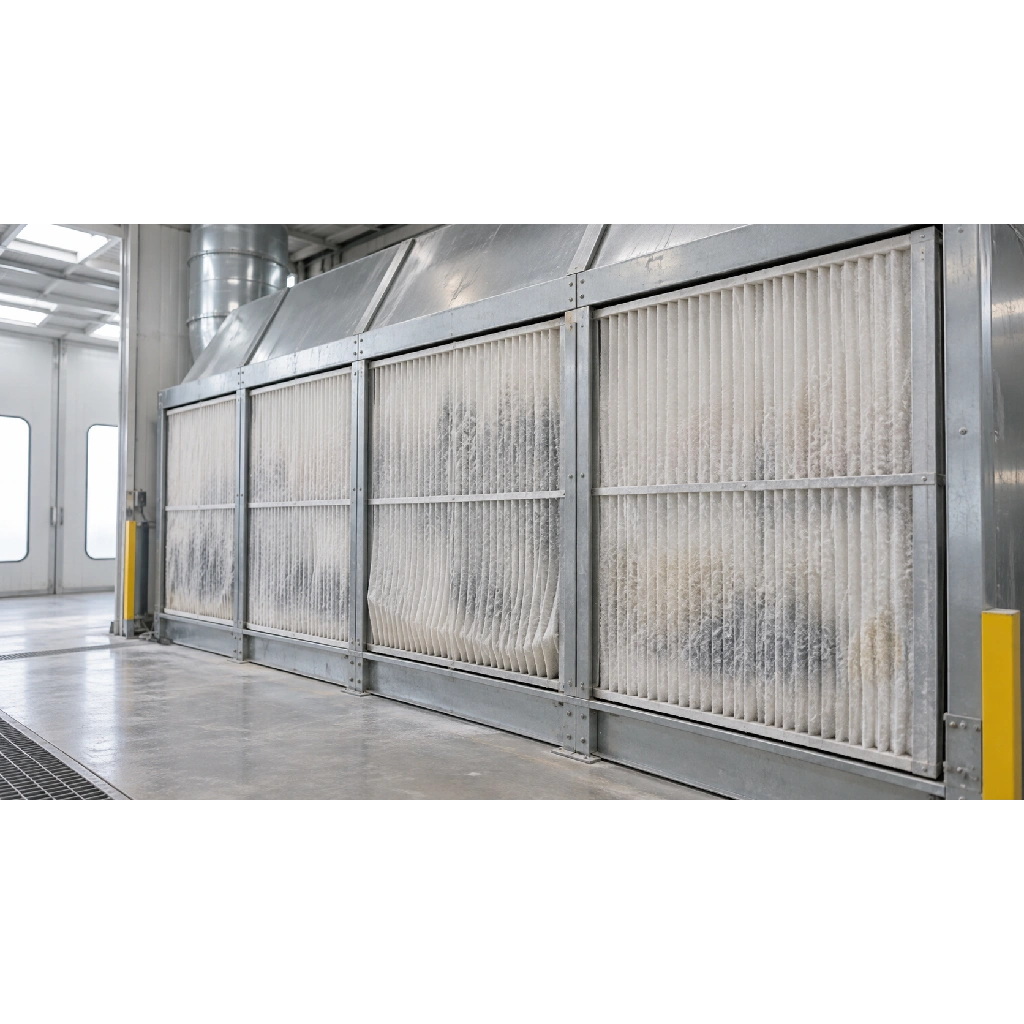
A spray booth filter can look like a small part of the finishing process, yet its condition affects how the booth handles overspray. As paint builds up, air may struggle to pass through the filter media. That can change airflow at the work area, allow contamination to linger, and make a consistent finish harder to achieve. Regular spray booth filter checks help operators spot these changes before they become routine problems.
What a filter check should cover
A useful check begins with the filter itself, but it should not end there. Look across the full filter face for heavy paint build-up, tears, gaps, sagging or media that has shifted out of place. Check that each section sits securely in its frame so air cannot take an easier route around it. A filter with a relatively clean centre and badly loaded edges, for example, may point to uneven use or a fitting problem worth investigating.
The surrounding booth matters too. Paint collecting where it normally would not, or overspray drifting into the operator’s working area, can signal that capture is deteriorating. Note any visible damage to the filter housing and any change in the way air moves through the booth. These observations do not replace airflow measurements or formal maintenance, but they give the person responsible for the booth a clear reason to investigate.
Keep the check practical and consistent. A short record of the date, filter condition, action taken, and any unusual airflow or finish issues makes gradual changes easier to see. It also helps the next shift distinguish a new problem from one already being addressed.
Why appearance alone is not enough
Dry filters capture overspray in replaceable media. Some systems use more than one filtration stage, and each stage may load differently. A front layer can look acceptable while a later layer needs attention, or one part of a filter wall can receive more paint than another. Follow the booth’s maintenance instructions for inspecting every accessible stage rather than judging the system from its most visible surface.
A darker filter is not, by itself, a reliable change indicator. Paint colour, the type of work and the amount of spraying all affect its appearance. The more useful question is whether the media can still perform as intended while the booth maintains suitable extraction for the job. Where the installation has a pressure indicator or another monitoring method, use it according to the manufacturer’s guidance and record readings so changes are easier to recognise. Do not invent a replacement threshold based on how another booth operates.
For instance, a workshop that usually sprays small parts may take on a run of large panels. The filters could load faster because more overspray reaches them, even though the normal replacement date has not arrived. Checking condition during the run gives the team a better basis for deciding when to change them.
Set a check routine around actual spraying
The right inspection frequency depends on the booth design, coating, workload and filter media. Start with the documented maintenance programme and any change intervals specified for the installation. Then consider whether periods of heavier use call for closer observation. A fixed calendar reminder is useful, but it should not be the only trigger for a check.
Before spraying, make sure filters are present, properly seated, and free of obvious damage. During operation, pay attention to changes such as overspray escaping the expected capture area or a sudden difference in airflow. After a filter change, verify that the replacement media is fitted correctly and that any covers or retaining parts are secure. If a problem persists, the cause may sit elsewhere in the extraction system and needs a wider assessment.
A simple routine can cover the essentials:
- Inspect: Check each accessible filter stage, its frame, and the surrounding area for loading, damage or gaps.
- Compare: Look for changes from the booth’s normal condition and review any monitoring readings available.
- Record: Note what was found, what was replaced, and whether further investigation is needed.
- Escalate: Arrange appropriate maintenance when extraction or overspray capture appears abnormal.
For more detailed information on this topic, read our guide on How Spray Booth Ventilation Improves Safety and Finish Quality.
Replace filters without creating a new problem
Changing a loaded filter restores the intended filtration path only if the replacement is suitable and installed correctly. Use media specified for the booth and its spraying process. A filter that merely fits the opening may differ in its ability to capture overspray or allow air through. Where a booth has multiple stages, keep them in the specified order.
Plan the change for a safe pause in spraying and follow the site’s procedure for shutting down and accessing the booth. Loaded media can contain paint residue, so handle and dispose of it under the applicable site and supplier instructions. When fitting new media, check the orientation if specified, seat it evenly and close any gaps around the frame. Record the change before returning the booth to normal use.
Avoid leaving a damaged section in place because the rest of the filter wall looks usable. Air can pass through a gap rather than through the media, reducing the value of otherwise sound filters. Likewise, replacing filters repeatedly without investigating unusually rapid loading can hide a change in spraying volume, work positioning or booth operation.
Treat filter checks as part of booth upkeep
Filters are one part of a wider extraction system. A clean filter will not correct a fault with the fan, ducting or another component, and a loaded filter can affect performance even when those parts are working. When observations suggest a broader issue, use the booth’s maintenance programme and arrange the appropriate assessment rather than relying on a quick filter change alone.
The most useful habit is to connect what operators see during spraying with what maintenance records show. Consistent checks, suitable replacement media and attention to unexpected changes help the booth capture overspray as intended and support a more dependable finishing environment.